Why Insurance Distribution Needs an Operating System
Insurance distribution doesn't have a talent problem. It has a systems problem.
Walk into almost any agency or agent downline and you'll see the same picture. A dialer in one tab. A CRM in another. Three carrier portals, each with its own login and its own idea of what a "pending" case means. Contracting tracked over email. Compliance notes in a shared drive. And holding it all together, a spreadsheet that one person understands and everyone depends on.
None of these tools is bad. The problem is that none of them knows the others exist.
The hidden cost of scattered tools
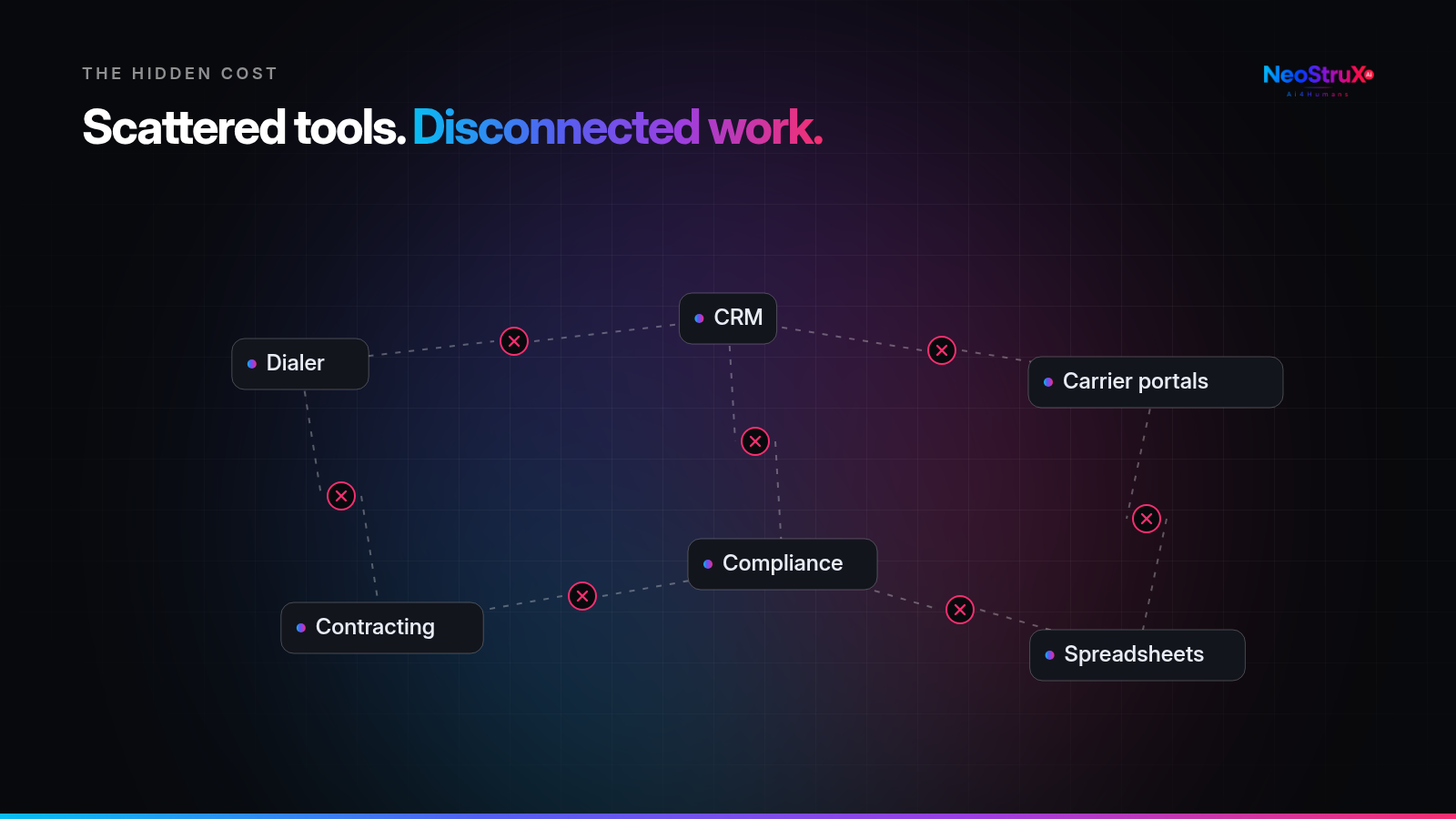
Every gap between systems becomes a job for a human. An agent finishes a call, then copies the same details into the CRM, the carrier application and a tracking sheet. A manager wants to know which cases are stuck, so they message five people and wait. A compliance lead wants to confirm that the right disclosure was given on the right call, and has to rebuild the story from recordings, notes and timestamps that live in different places.
This work is invisible on an org chart, but it is everywhere in the day. It slows agents down. It hides problems until they are expensive. And it makes the most important questions in the business, the ones about customers, quality and risk, the hardest to answer.
I see this firsthand. Alongside NeoStruX AI, I also founded ArmiCare Insurance, an agent-first distribution company. The pattern is consistent: good people losing hours to the seams between tools, and leaders making decisions from a picture that is always slightly out of date.
Why another tool won't fix it
The instinct is to add one more product: a better dialer, a smarter CRM, a new dashboard. Each one promises to solve a slice of the problem. Each one adds another login, another data model and another place where the truth can drift.
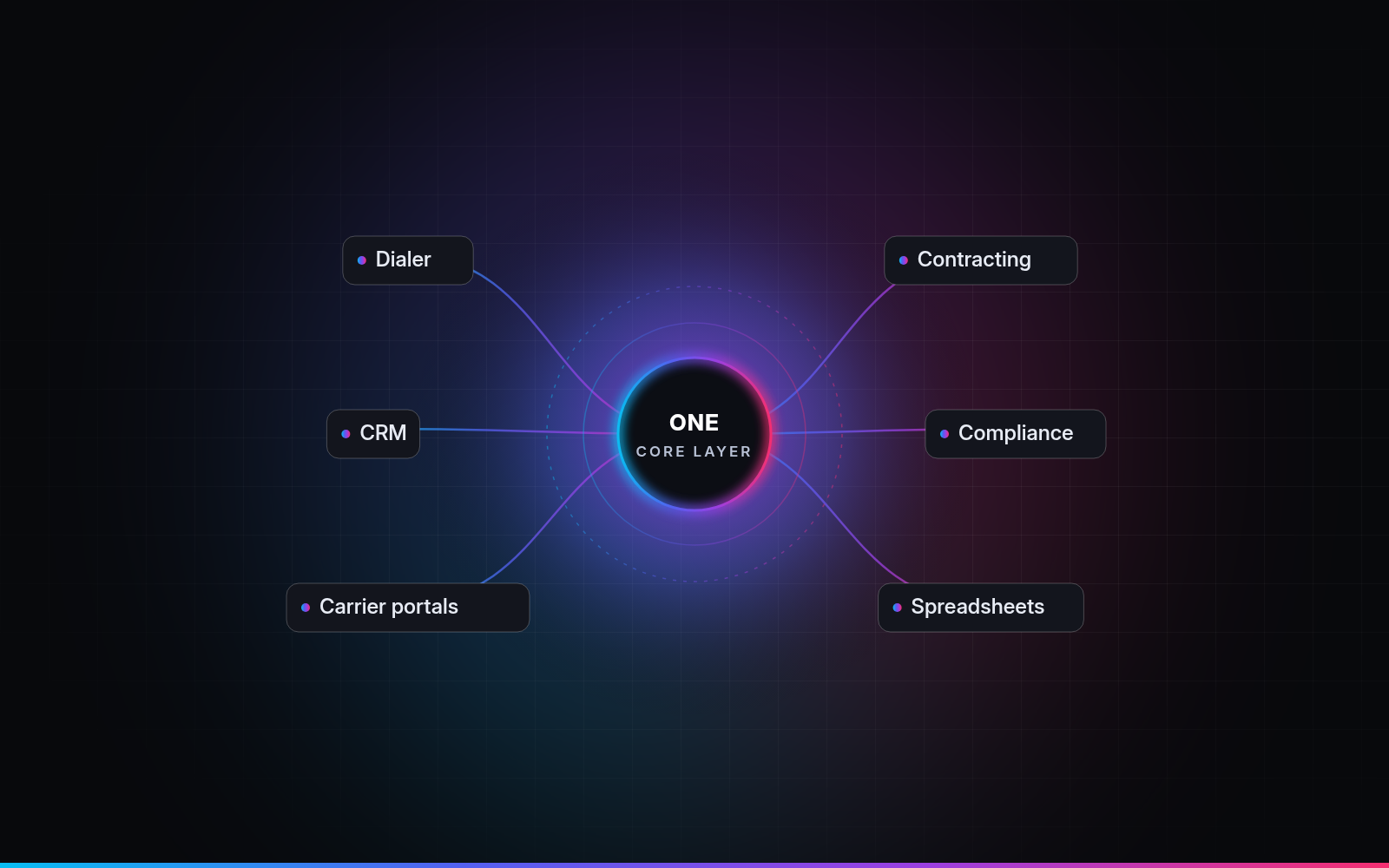
Distribution doesn't need more point solutions. It needs a layer underneath them: something that connects acquisition, operations, carrier workflows, contracting and compliance into one coherent system, with one shared view of the customer, the agent and the case.
That's what an operating system does. It doesn't replace every application. It gives them a common foundation, so work moves between them without being retyped, re-explained or lost.
What an operating system for distribution looks like
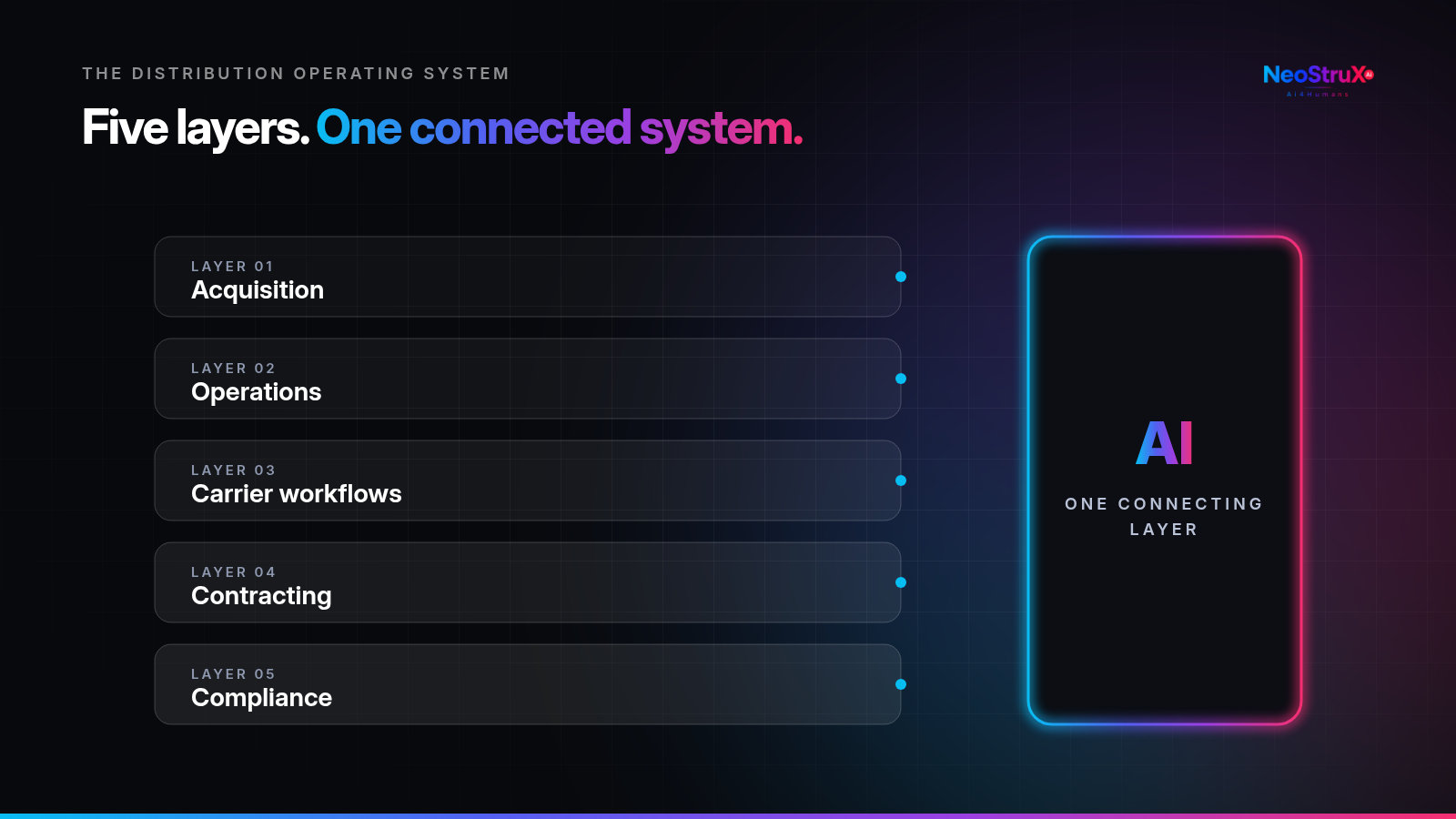
In practical terms, it means a few things working together:
- One record of truth. A customer, a call, an application and a policy are linked from first contact to issue and beyond. Nobody has to reconcile three versions of the same case.
- Workflows that follow the case. When an application stalls at a carrier, the right person sees it, with context, before the customer has to call and ask.
- Contracting and licensing as live data. Before a lead is routed, the system already knows which agents are appointed and licensed for that product and that customer.
- Compliance built into the flow. Required disclosures, consent and suitability steps are part of the workflow itself, captured as they happen and auditable later, not reconstructed after the fact.
- Clarity for leaders. Instead of a weekly spreadsheet, managers see what is happening now: where cases are, where quality is slipping and where agents need support.
Where AI belongs, and where it doesn't
AI is what makes this possible at the speed distribution moves. It can summarize a call the moment it ends, draft the CRM notes, flag a missing disclosure, suggest the next best action, and spot a case drifting off track before a human would notice.
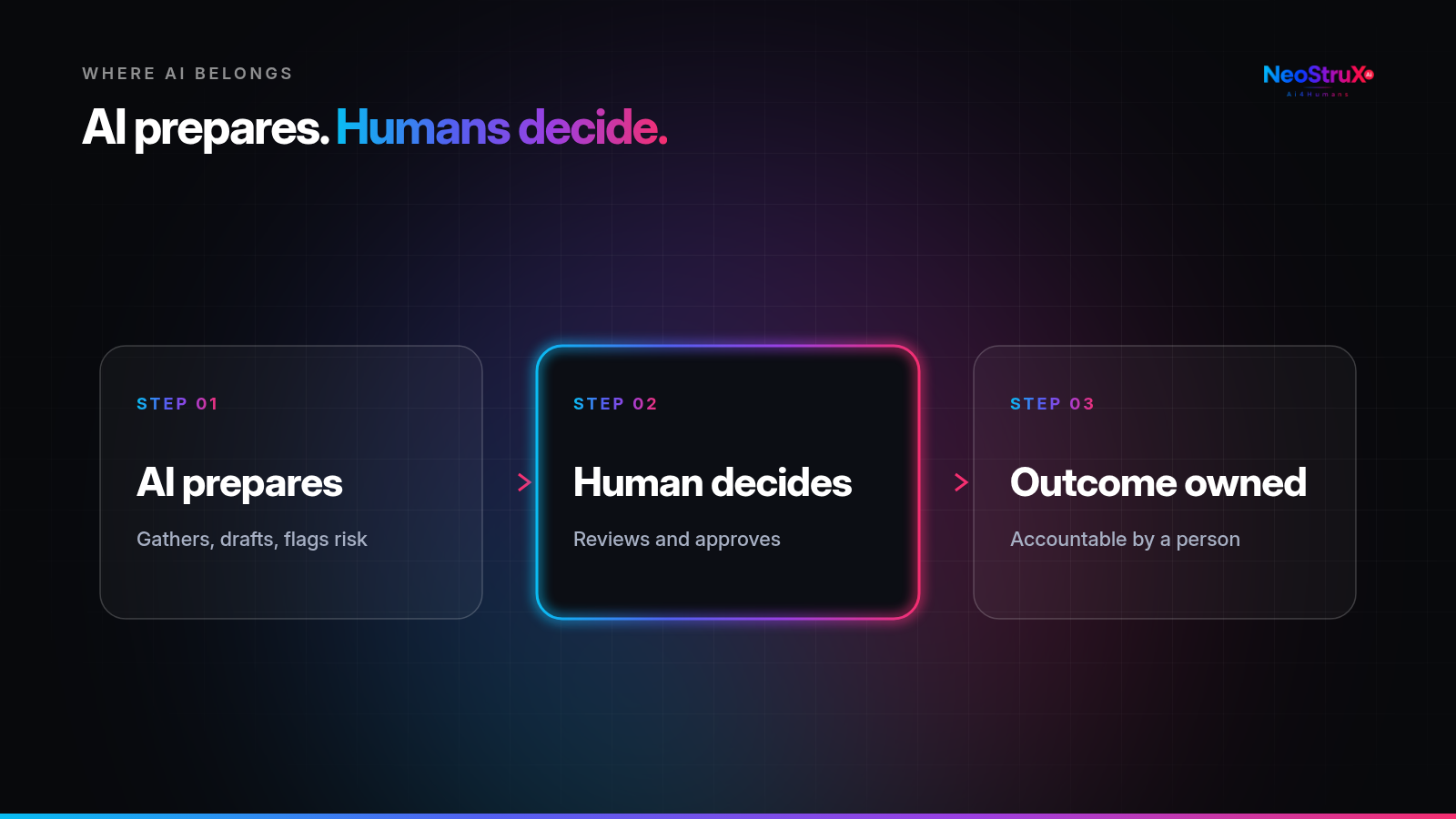
But there is a line we hold firmly. AI should never act alone on decisions that matter. Suitability, a recommendation to a customer, a compliance judgment, a change to an agent's standing: these belong to accountable people. AI prepares the work, surfaces the risk and explains its reasoning. A human reviews, decides and owns the outcome.
We call this AI4Humans. In practice it means three commitments:
- Human in the loop by design. Escalation paths are built in, not bolted on.
- Every action is traceable. What the AI suggested, what a person approved and when, all logged and auditable.
- Governance before automation. We decide what AI is allowed to do before we let it do anything.
Insurance is a business built on trust. An operating system that quietly makes decisions on its own would undermine that trust. One that makes people faster, better informed and more accountable strengthens it.
The shift ahead
The agencies and downlines that lead the next decade won't be the ones with the most tools. They'll be the ones whose tools work as one system, where agents spend their time with customers instead of copying data, where compliance is visible instead of assumed, and where leaders can see the whole business clearly.
That is the system we're building at NeoStruX AI: an AI operating system for insurance distribution, built by operators, for operators, with humans at the center of every decision that matters.
If this problem sounds familiar, I'd like to hear how it shows up in your operation. You can learn more about what we're building at neostrux.ai.